About
Álvaro Sampedro’s fascination with gardens began as a child, digging in the soil at his grandfather’s garden in Soto del Real, in the mountains north of Madrid. For years, though, his career took a different path: a law degree, a stint at a law firm, then several years as a headhunter recruiting talent for the banking sector. It was the 2008 financial crisis that gave him the push to change course — he left his corporate career, trained at the Castillo de Batres landscape design school under his mentor Isaac Escalante, and in 2011 opened his own studio in Madrid.
Since then, that hands-on, self-taught foundation has grown into a design practice built on Mediterranean naturalism — informal, drought-wise planting that works with the region’s light and climate rather than against it. The approach has made him one of Spain’s most sought-after landscape designers, ranked among Architectural Digest España’s AD100, with work featured in Veranda, Gardens Illustrated, Elle Decor and The Aficionados.
His studio’s projects span Spain — Madrid, Granada, Toledo, Málaga, the Tiétar Valley, Ribera del Duero — and reach steadily further afield, with work completed in Dallas, Texas, Comporta in Portugal and Geneva, Switzerland, and current projects including a Mediterranean hotel garden in Göçek, Turkey, a palace garden in Valletta, Malta, a Caribbean-facing garden in the Dominican Republic, and further work underway in Florida, Kuwait and India.
Read more here: Press
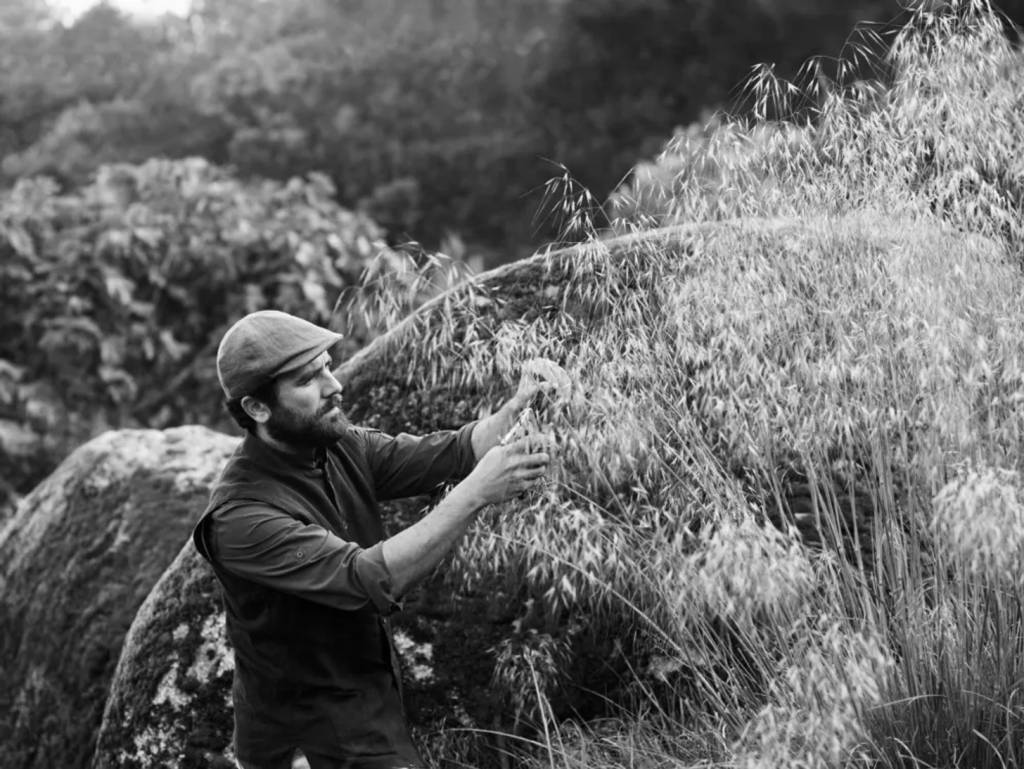
The main goal of our landscaping designs is to respect the natural integrity of the area. We learn from the natural landscape that surrounds us, and we strive to preserve and leverage the natural resources available to create sustainable gardens, adapted to the natural topography of the area. We use a selection of native species with a high capacity to adapt to the weather conditions of the area.

Sustainable and autochthonous gardens are created using plants that easily adapt to the area’s climate and soil. Plants that don’t demand high amounts of water, meaning that irrigation will be minimized. In general, after two years plants will be able to survive with minimum irrigation and hardly maintenance.
- They easily adapt to the soil and climate of the region.
- They are more resistant to plagues.
- Autochthonous species reproduce on their own, meaning that
once the garden is mature it is likely that new plants of the existing species will emerge naturally. - Autochthonous gardens favor landscape and visual integration of the garden with its natural environment.
- A sustainable garden respects the natural cycles of the area, allowing a responsible and efficient use of the natural resources and respecting the area’s biodiversity.
- Sustainable gardens facilitate an ecological balance between the different species and its surrounding natural environment. They attract useful fauna, such as pollination species.

We create dynamic and evolving spaces, where the different seasons are very present and play a crucial role in helping us change the different species throughout the year. A garden that reflects the passing of time and is in constant evolution.
These gardens are designed for the long term, so they will increase their value as time goes by.
We create gardens that can be lived and enjoyed. Our gardens are not meant to be understood under one unique point of view, they invite you to explore them in order to fully discover and appreciate them.
We make an effort to unstructure, wilden and naturalize our gardens so they can facilitate reconnexion between humans and their natural environment. The main purpose of our job is that our job isn’t noticed, so people can enjoy practical and aesthetical spaces that merge smoothly and naturally with the environment.

Through the years, Alvaro’s body of work have been featured in the most prominent gardening editorial platforms: